


Betancuria
The first nucleus where the history of Fuerteventura was born.


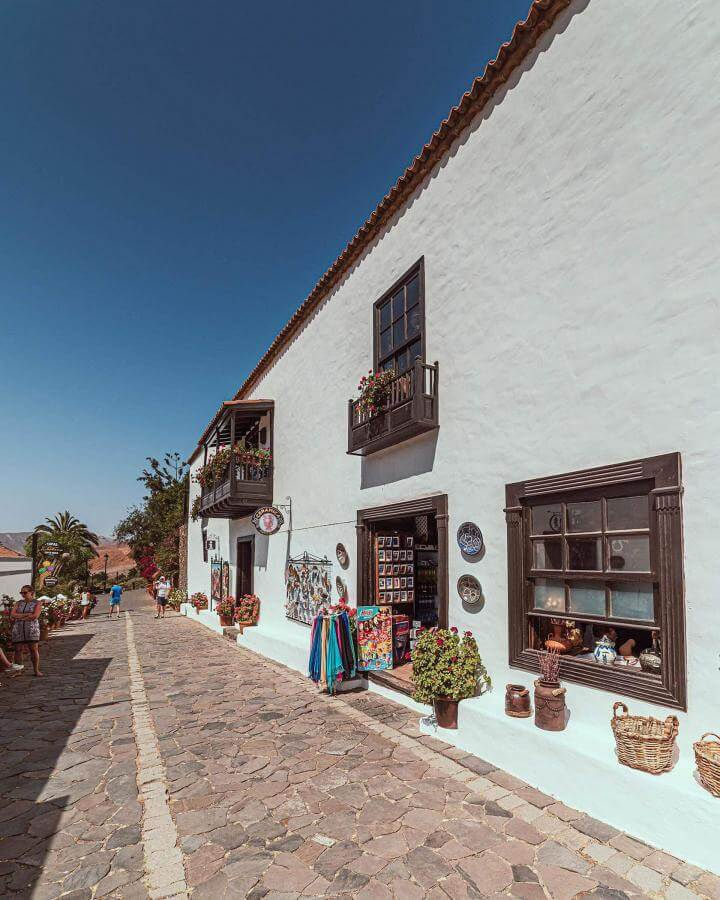
Betancuria is one of the most important colonial landmarks in the history of the Canary Islands. To study its history, we must go back to 1404, the year of its foundation by the Norman knight Jean de Bethencourt, who chose its location in an inland valley, far from the sea for better defense against pirates. The island's capital until 1834, it reached its peak in the 18th century, thanks to its excellent grain harvests.
A stroll through Betancuria allows visitors to immerse themselves in the ancient history of the island of Fuerteventura. This colonial town, recognized as a historic site in 1979, offers visits to its many temples, including the churches of Santa María and La Concepción, the chapels of Santa Inés and Nuestra Señora de La Peña, and the former Franciscan convent of San Buenaventura.
Also not to be missed are the Museum of Sacred Art and the Archaeological and Ethnographic Museum of Fuerteventura.
NOT TO BE MISSED
Historic Center:
Walking through its streets, you can feel the history of the island's colonization.
Typical houses and impressive religious monuments.
Cathedral of Santa Maria:
Built in Gothic style in the 15th century, it was rebuilt in Canarian style after being destroyed by a pirate raid.
It was elevated to a cathedral in 1424.
Archaeological Museum:
To learn more about the history of Fuerteventura, you can visit the Archaeological and Ethnographic Museum (Museo Arqueologico y Etnografico). This small museum focuses primarily on the Guanche tribes, the natives who inhabited the island at the time of the Norman and Spanish conquests.
Various bone and shell tools, ceramics, and religious objects are on display, with information panels illustrating their uses and explaining their daily life.
Fishing techniques and how water was collected, a crucial element for life in such an arid environment.
The museum also features a tomb from the region estimated to be between 600 and 1,000 years old.